Overview
I used to ride my e-bike to work every day until the battery degraded to the point where it could no longer hold a charge for the round trip. After buying a replacement pack, I didn’t want the old battery to go to waste, so I decided to turn it into something genuinely useful: a portable power station.
Because it was a large battery, I set myself a challenge: make it not just functional, but a properly finished, safe product I’d actually trust to use every day. Working with lithium batteries can be dangerous, so safety drove almost every decision in the build.
The result is a power station with a 140W USB module capable of charging anything from a phone to a power-hungry laptop, later extended with a 24V expansion that lets it run larger appliances like my compressor coolbox.
Key features
- 140W USB module with two USB-A and two USB-C ports, USB-C delivering full 20V Power Delivery (140W total across the module).
- 24V XT-60 expansion adding two 24V ports later, with a custom cable that plugs a compressor coolbox straight into the pack.
- Safety-first electronics, with the original battery and BMS left completely untouched, fusing at every stage of the circuit to protect both the battery and each individual component, and components rated well beyond their actual load.
- Kill switch wired to a relay that cuts power to the entire system instantly.
- Live monitoring through a small display showing voltage and battery percentage.
- Active cooling from a fan tied to the USB module that pulls fresh air into the enclosure whenever the module climbs above 40°C.
- Custom-fitted housing, a 3D-printed end-cap that replaces the original e-bike terminal, matched precisely to the battery’s metal shell, which is kept as a strong protective outer case.
The build
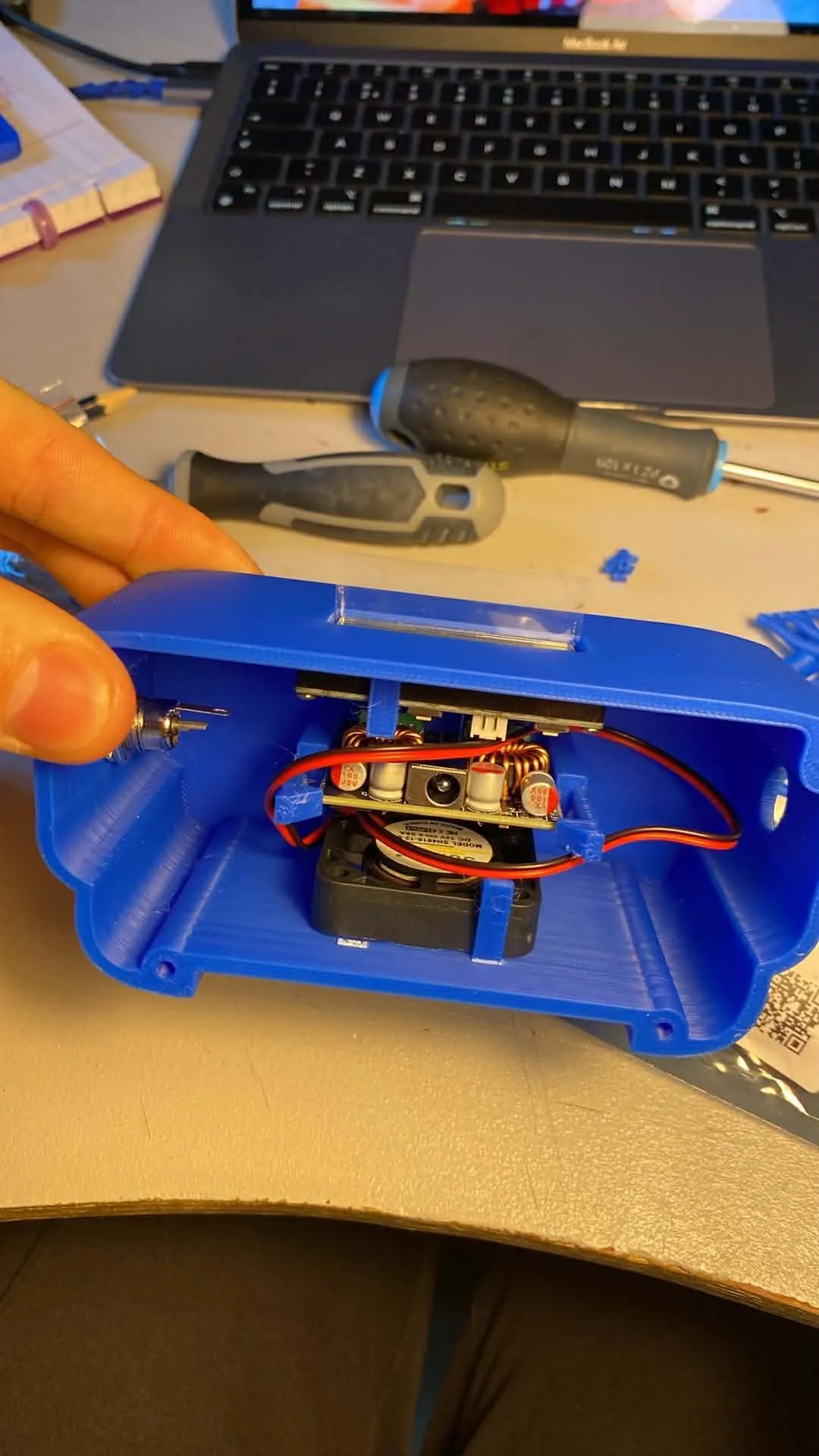
The core is a 36V 10Ah e-bike battery, left intact with its original BMS. A buck converter steps the voltage down to 24V, which feeds both the USB module (for full 20V PD) and the 24V XT-60 ports. The original charge port was kept but swapped for a sturdier metal connector.
Every stage is fused, every component is rated well beyond its real load, and a relay-driven kill switch can cut the whole system instantly. These are the details that turn a battery and a converter into something safe to leave running unattended.
The enclosure end-cap was modelled in OnShape, my first time doing any 3D modelling at all. I originally wanted to print in PETG carbon fibre for its higher temperature resistance, but a faulty filament batch caused endless print problems, so I ended up printing in standard PLA. It could warp at higher temperatures, but so far it has held up fine.
For the coolbox, I built a custom XT-60 cable that connects the compressor cooler directly to the pack. To test it properly, I took a full cooler of cold beer and ice packs to a festival in temperatures up to 38°C, and even after adding warm drinks to chill, I had ice-cold beer for two full days straight before the pack ran empty.
Challenges
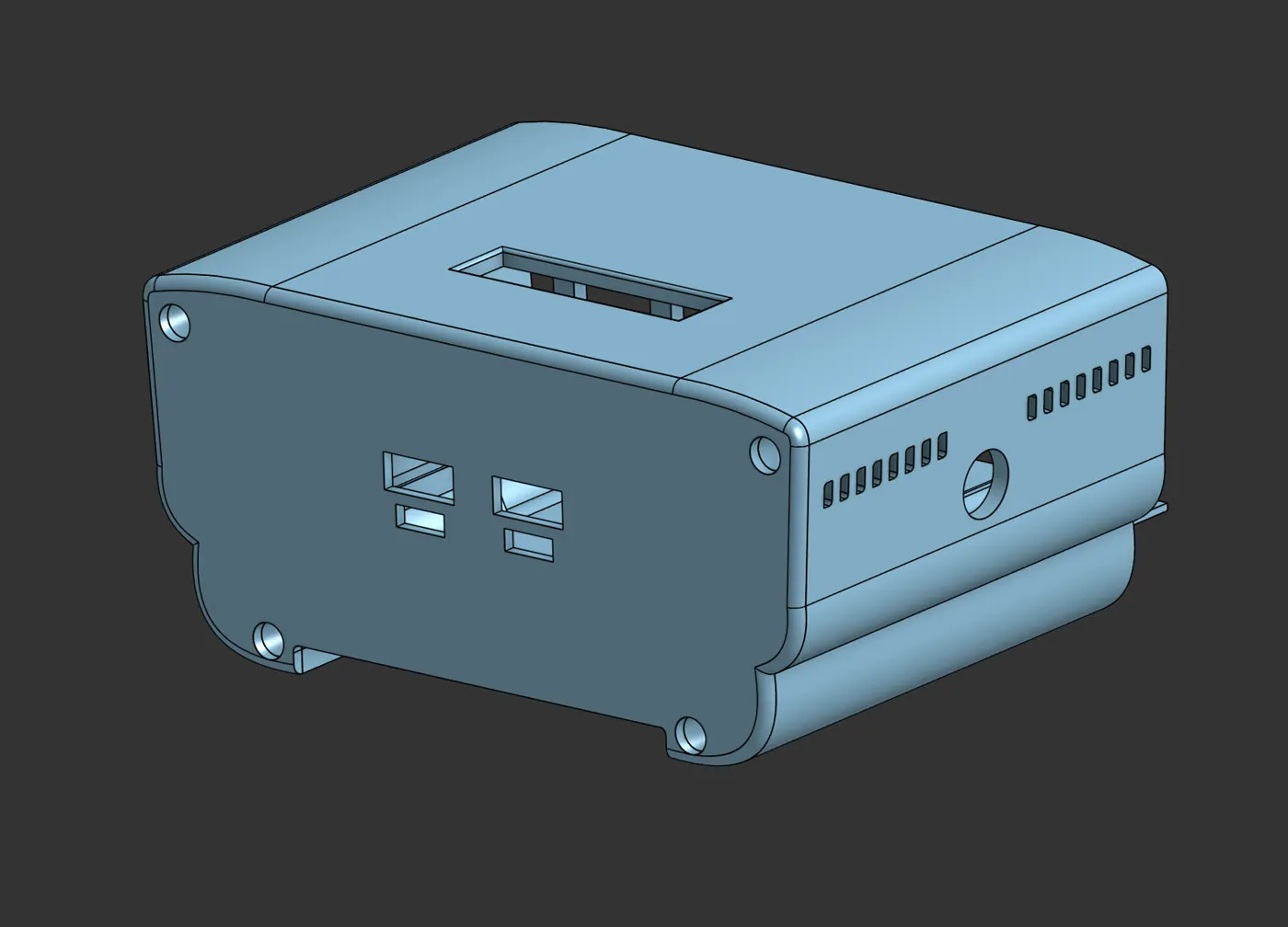
The hardest part was the 3D model. Every component had to fit onto it perfectly and line up with the battery’s existing metal housing, which meant painstakingly recreating the original terminal’s exact dimensions. It took a lot of headaches and test prints to get right, especially as a complete 3D-modelling beginner.
What I learned
This project taught me a huge amount across several disciplines: designing electronic logic from scratch, 3D modelling from zero, and (maybe most of all) patience. Working with batteries also gave me a healthy respect for doing things safely and not cutting corners when the stakes are real.